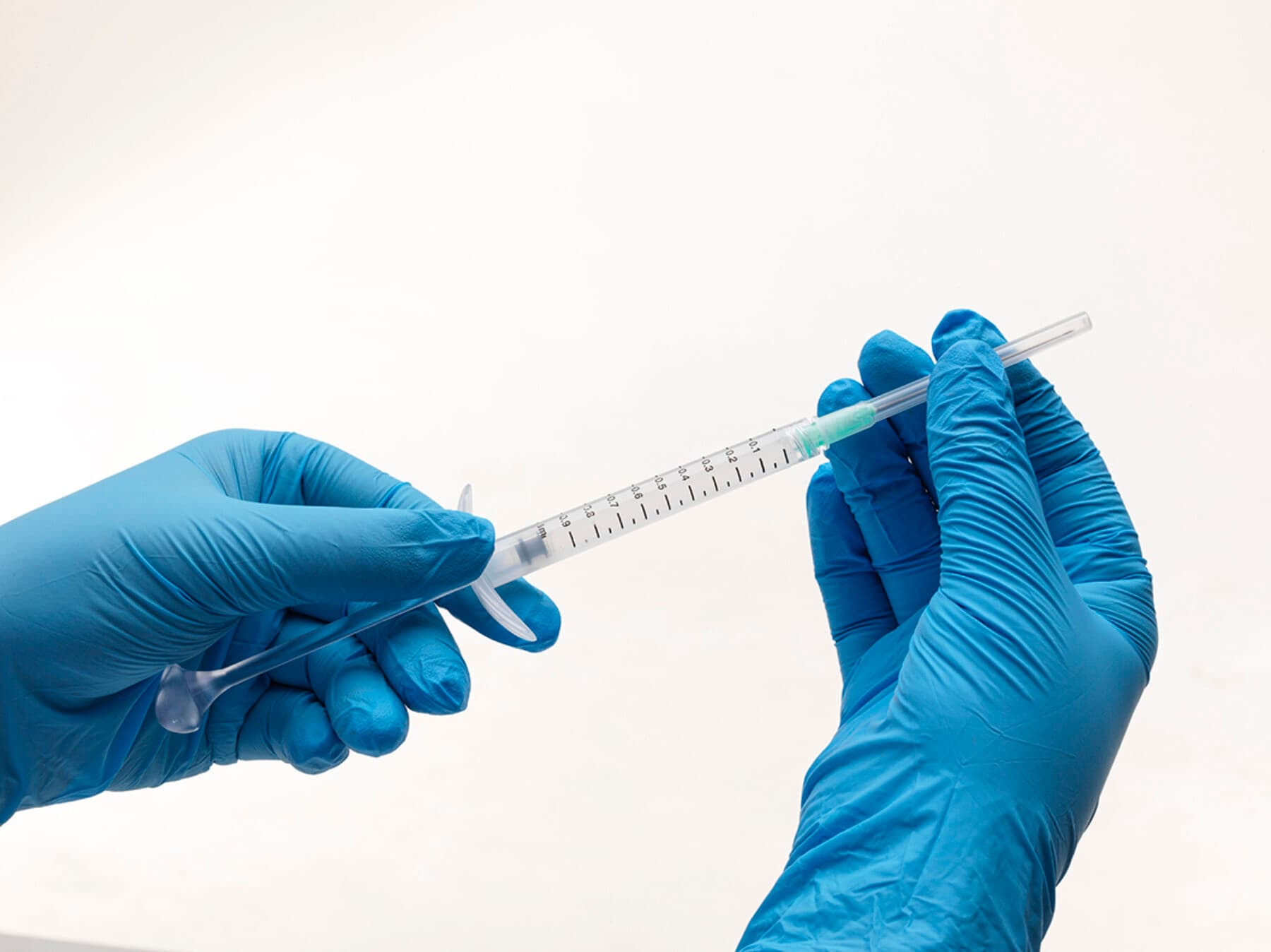
Arthrosamid® is a non-biodegradable injectable polyacrylamide hydrogel (2.5% iPAAG) implant that delivers long-lasting pain relief — improving the quality of life for patients with knee OA.
مصر
What is Arthrosamid®?
Arthrosamid® is a single, minimally invasive, long-lasting knee OA treatment — a non-biodegradable injectable polyacrylamide hydrogel (2.5% iPAAG) implant for intra-articular use.
Relieve pain and improve the function of the knee affected by knee OA, with a simple, one-step outpatient procedure.
Pioneering
Arthrosamid® is a first-in-class synovial implant delivered as a single, minimally invasive out-patient procedure performed under local anaesthesia, with ultrasound guidance.
Proven
Researched for more than two decades, Arthrosamid® has been proven to maintain a statistically significant reduction in pain in patients with knee OA 5 years after treatment.
Pain Relief Treatment
A single, minimally invasive, long-lasting knee OA treatment, Arthrosamid® has demonstrated an improvement in quality of life with patients in clinical trials reporting a reduction in pain by Week 4 — and lasting over 5 years.
What is 2.5 % iPAAG?
Intra-articular injectable polyacrylamide hydrogel (2.5% iPAAG) implant in Arthrosamid® is made up of 2.5% cross-linked polyacrylamide and 97.5% water.
Biocompatible: permeable to salts and organic molecules the hydrogel is able to integrate with soft tissue
Viscoelastic: cross-linked chains of polymer allow flexible shear
Non-degradable: structural stability of hydrogel provides longevity of action
permeable to salts and organic molecules the hydrogel is able to integrate with soft tissue
Viscoelastic
cross-linked chains of polymer allow flexible shear
Non-degradable
structural stability of hydrogel provides longevity of action
How does Arthrosamid® (2.5% iPAAG) work?
In a knee affected by OA, the synovium plays a central role in both acute and chronic disease.
Mechanical signalling (via mechanoreceptors) and chemical signalling (e.g. cytokines) drive OA progression and create a cycle of inflammation and damage.
Synovial inflammation, triggered by factors such as trauma or overuse, leads to a fibrotic and inelastic synovial membrane.
This, in turn, causes upregulation of mechanoreceptors in the synovium and in inflammatory cells, causing further inflammation and the clinical symptoms of OA — effusion, reduced function, and pain.
Delivered with a single injection
Arthrosamid® is injected into the synovial cavity, where it disperses within the synovial fluid. Its distribution follows the natural fluid flow of the joint, which is directed by knee movement.
Arthrosamid® is cleared from the synovial cavity and combines with the synovial membrane
Normal intimal transport mechanisms, which remove particulate material from the synovial cavity, also act on Arthrosamid®.
Through this process, the gel is transported through the synovial intima and into the synovial subintima.
Improved knee joint function
The physical presence of Arthrosamid® within the synovial tissue increases elasticity towards that of healthy tissue. By removing stimuli for the mechanical pathway driving OA progression, this leads to improved joint function and long-lasting pain relief.
Complete integration
Once deposited in the synovial subintima, Arthrosamid® becomes integrated — a process largely complete within 4–6 weeks after injection.
The mature, stable local response to the implanted 2.5% iPAAG is characterised by a fine network of collagen fibrils enmeshed with Arthrosamid®, anchoring it as a permanent implant within the subintimal synovium.
This stable integration, 2.5% Polyacrylamide Hydrogel Synovial tissue which results in increased tissue elasticity, means that patients can experience long-lasting pain relief from knee OA.
In a knee affected by OA, the synovium plays a central role in both acute and chronic disease.
Mechanical signalling (via mechanoreceptors) and chemical signalling (e.g. cytokines) drive OA progression and create a cycle of inflammation and damage.
Synovial inflammation, triggered by factors such as trauma or overuse, leads to a fibrotic and inelastic synovial membrane.
This, in turn, causes upregulation of mechanoreceptors in the synovium and in inflammatory cells, causing further inflammation and the clinical symptoms of OA — effusion, reduced function, and pain.
Ready to take the next step?
Contact us to use Arthrosamid® 2.5 % iPAAG in your knee osteoarthritis patients today.